Indian Institute of Drone Technology
भारतीय ड्रोन प्रौद्योगिकी संस्थान
Indian Institute of Drone Technology
भारतीय ड्रोन प्रौद्योगिकी संस्थान
Indian Institute of Drone Technology
भारतीय ड्रोन प्रौद्योगिकी संस्थान
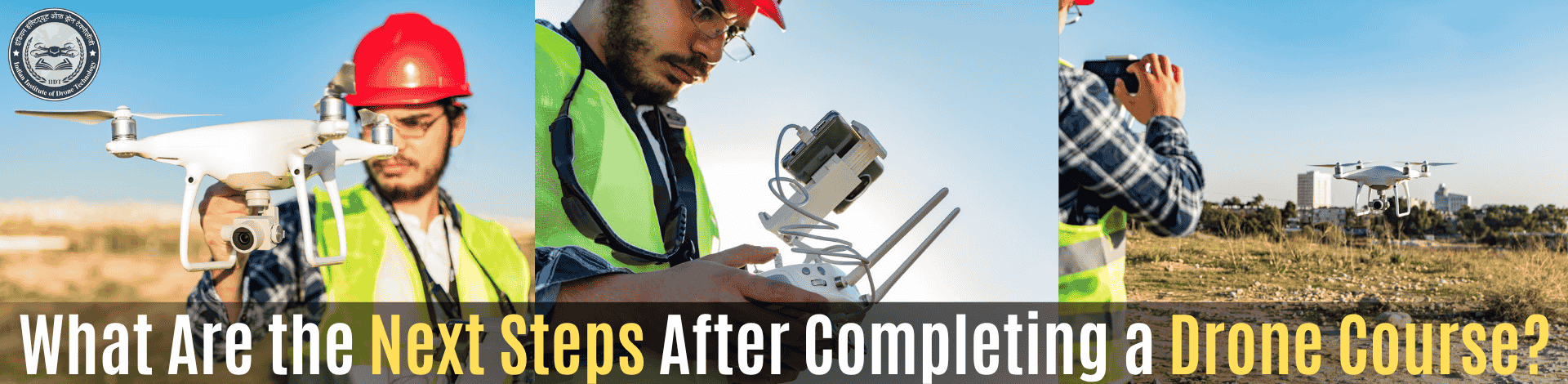
Have you completed your drone course but still unsure what to do next? This is one of the most common problems students face after training.
A drone course gives you a foundation, not a finished career. What you do after training decides whether you grow or get stuck.
After completing a drone course in India, students must focus on skills, certification, industry exposure, and real-world experience to build a career.
If you have trained through one of the Best Drone Education Programs, this blog will help you convert that learning into real outcomes.
The 4-Step Career Path After Completing a Drone Course in India
Most students fail because they stop at certification. A structured path increases your chances of success significantly.
1. Skill Building
2. Certification Alignment
3. Industry Exposure
4. Job or Freelance Entry
Most drone students fail not because of lack of training, but because they stop after certification.
A drone course gives entry, but practical skills build your career. Organizations like DGCA define rules, but companies hire based on skills.
What skills matter most?
- Drone survey and mapping using GIS and Pix4D
- Basic drone repair and troubleshooting
- Data analysis for agriculture and infrastructure
According to 2026 reports, in India’s drone hiring ecosystem, nearly 60-70% of entry roles require mapping and data skills.
Expert insight:
Most companies overlook that certification proves eligibility, not employability.
Expert quote:
“Drone careers are shifting from flying to data-driven operations.” Training Advisory Panel, ISRO aligned programs
Get UAV Course Certification That Is Industry-Recognised
Certification must align with DGCA norms to unlock job opportunities. Programs like UAV Course Certification India, offered by Indian Institute of Drone Technology, help students meet industry standards.
Why certification matters:
- Required for legal operations under DGCA
- Preferred in government and enterprise projects
- Builds employer trust
A 2026 trend analysis shows that DGCA-aligned certification increases hiring chances by 40-50% in structured sectors.
- 80% of infrastructure projects require certified operators
- Certification validity impacts employability
- Compliance is mandatory for commercial operations
Expert insight: Cheap courses often skip compliance, which delays career growth later.
Apply for Entry-Level Roles and Gain Experience
Start with field roles to build real industry confidence. Companies and ecosystems around Tata Group and emerging startups offer entry-level roles.
Common roles:
- Drone operator trainee
- Survey assistant
- Field technician
Most companies overlook that early field experience builds faster growth than waiting for high-paying roles.
Realistic 2026 salary range:
- ₹15,000 to ₹30,000 per month for freshers
- ₹40,000+ after 1-2 years with specialization
Expert insight: Consistency in projects matters more than your first salary.
Choose the Right Drone Training Institute for Career Growth
Your institute should connect you to industry, not just teach flying. Selecting the Right Drone Training Institute like Indian Institute of Drone Technology (IIDT) ensures better exposure.
What to check:
- Live industry projects
- Placement or internship support
- Advanced modules beyond basics
Here’s what the numbers reveal:
- Students with project exposure get placed 2x faster
- 65% of employers prefer hands-on experience
In India, students who complete projects during training get hired faster than those who only complete certification.
Expert quote:
“Training without exposure delays employability.” Skill Development Analyst, IITs ecosystem
Conclusion
Completing a drone course is just the beginning. Real success comes from the steps you take after training. Focus on skills, choose recognised certification, and stay close to real-world applications. That is how careers are built. If you genuinely enjoy drones, this field offers more than jobs. It offers a chance to build, explore, and create something meaningful.
FAQs
1. What are the next steps after completing a drone course?
Build skills, gain certification, get experience, and apply for jobs or projects.
2. Is DGCA certification necessary in India?
Yes, it is required for most commercial drone operations.
3. Can I earn after completing a drone course?
Yes, through jobs or freelancing in mapping, agriculture, and inspection.
4. Which institute is best for drone training?
Institutes like Indian Institute of Drone Technology (IIDT) provide structured career-focused programs.
5. What skills are needed after drone training?
Mapping, data analysis, maintenance, and real-world drone operations.
Leave a Comment
Your email address will not be published. Required fields are marked *

Comments